


Teacher Feature: PJ Edwards
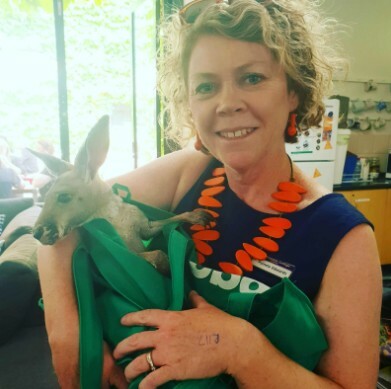
Could you tell us a little about yourself, PJ?
My name is PJ Edwards, and I am a non-Indigenous teacher with 30 years experience in a range of education settings. This includes teaching Reception to Year 10 in schools; babies, toddlers and pre-schoolers in public library early literacy programs; and adults at universities. I grew up in Port Augusta in South Australia and have taught in country South Australia, Adelaide and Scotland. I love the sea, but I am most at home in the bush in the Flinders Ranges. I love attending local arts events and I am a volunteer at the Adelaide Writer's Festival, Adelaide Festival and WOMADelaide. Being a volunteer in local community events is important to me. I believe in giving back, and I like to meet and engage with wide range of people outside of my circle of family and friends. I like being challenged and I like listening to a wide range of perspectives. I believe that this is something that helps me in my work as well as being a parent to three teenagers.
Can you share what sparked your passion for reconciliation in education and how your experiences as a teacher, librarian and lecturer have shaped your approach to culturally responsive teaching?
I was asked to take on a role as an Aboriginal Education Teacher at a Reception to Year 12 school and to create a RAP. I reached out to First Nations families at the school because it was important that everyone's voices were a part of the plan. The connections I made during the process were life changing for me. I have since worked on a RAP for a school system and for a university and now I don't think I can do any work in the future that doesn't involve reconciliation. In my teaching of adults, I have seen many non-Indigenous educators grow and change when they are willing to do some reflection about themselves and learn to be uncomfortable. I believe that getting to know yourself and being prepared to unlearn and relearn helps you to be a culturally responsive teacher. I do believe that educators can help create a better future and I am always inspired when I work alongside likeminded educators who have passion for reconciliation.
In your role advising on professional teacher education and curriculum resources, what do you see as the key to authentically embedding Aboriginal and Torres Strait Islander perspectives in schools?
It is an educator's professional responsibility to embed Aboriginal and Torres Strait Islander perspectives in the curriculum and every child needs their education to include the true histories of Australia. There is an abundance of rich, authentic resources created by First Nations peoples to use. I encourage educators to do their research and to read and learn about First Nations histories, cultures and perspectives. If you feel like you have a gap in your knowledge or understanding, then read! Libraries are great places to locate, access and select the right information for the right purpose and teacher librarians are here to help. Librarians can help you to evaluate your resources and ensure that you understand Indigenous Cultural and Intellectual Property rights when using and sharing information with children and young people in your education setting. The key is to be reflective, well informed and confident to make a start.
You have been a committee member for the successful and award-winning Blackwood Walk for Reconciliation which last year brought together over 1000 people. What impact did this event have on the community, and how do you see similar initiatives contributing to reconciliation?
In my involvement with the Blackwood Walk for Reconciliation, I have felt very moved by the commitment of a local community of all ages from babies to older adults, engaging in truth-listening. With the assistance of some volunteers, I created a Sea of Hands after the walk with 500 messages of support written by the local community in recognition of First Nations Stolen Generations survivors. It is important for local communities to create opportunities for learning (and unlearning and relearning), healing, truth-telling and truth-listening. We all need the opportunity to learn about the true histories of where we live. Reconciliation is everyone's work and when I see families with young children attending community events like the Walk for Reconciliation, I feel that there is hope for the future.
How has studying Kaurna language and engaging in practices like weaving deepened your understanding of and connection to First Nations cultures?
Teachers often ask how they can engage with their local First Nations community and build relationships. My first piece of advice is to be out in the community, actively participating in local events wherever the opportunity arises. I have learnt a lot by being involved in community events as a participant, a listener and a learner. The most significant part of engaging in these experiences has been the generosity, patience and reciprocity of First Nations peoples who have shared their knowledges and wisdom. I am very thankful for the chance to learn from First Nations peoples in the community and I feel that my life is enriched by these learning opportunities.
Looking forward, what are your hopes for reconciliation in education, and how do you see your role within the Narragunnawali program contributing to achieving these goals?
My work with Reconciliation Australia and the Narragunnawali team enables me to support educators with skills, tools and resources to confidently embed reconciliation and Aboriginal and Torres Strait Islander perspectives across the curriculum. The Narragunnawali platform is a rich and authentic resource and there really are no excuses for educators – the resources are here so I encourage you to get started!
When I was a teacher and teacher librarian in schools, I was the chairperson of a RAP and I worked with a leadership team who was very supportive of my passion for reconciliation. The RAP is a step-by-step process that was easy to follow. I used the Narragunnawali platform for curriculum resources that supported the RAP actions. I also used the Professional Learning webinars and workshops which supported me to meet the Australian Professional Standards for teachers. My RAP journey helped me deepen my commitment to reconciliation, which has been lifechanging for me.
I am a firm believer in reconciliation and I’m proud to work in the Narragunnawali team and do reconciliation work every day. I encourage all educators to make a strong commitment to their cultural responsiveness as an essential component of their work. All educators can make small steps every day for the reconciled Australia that the children of today and the future will benefit from.